
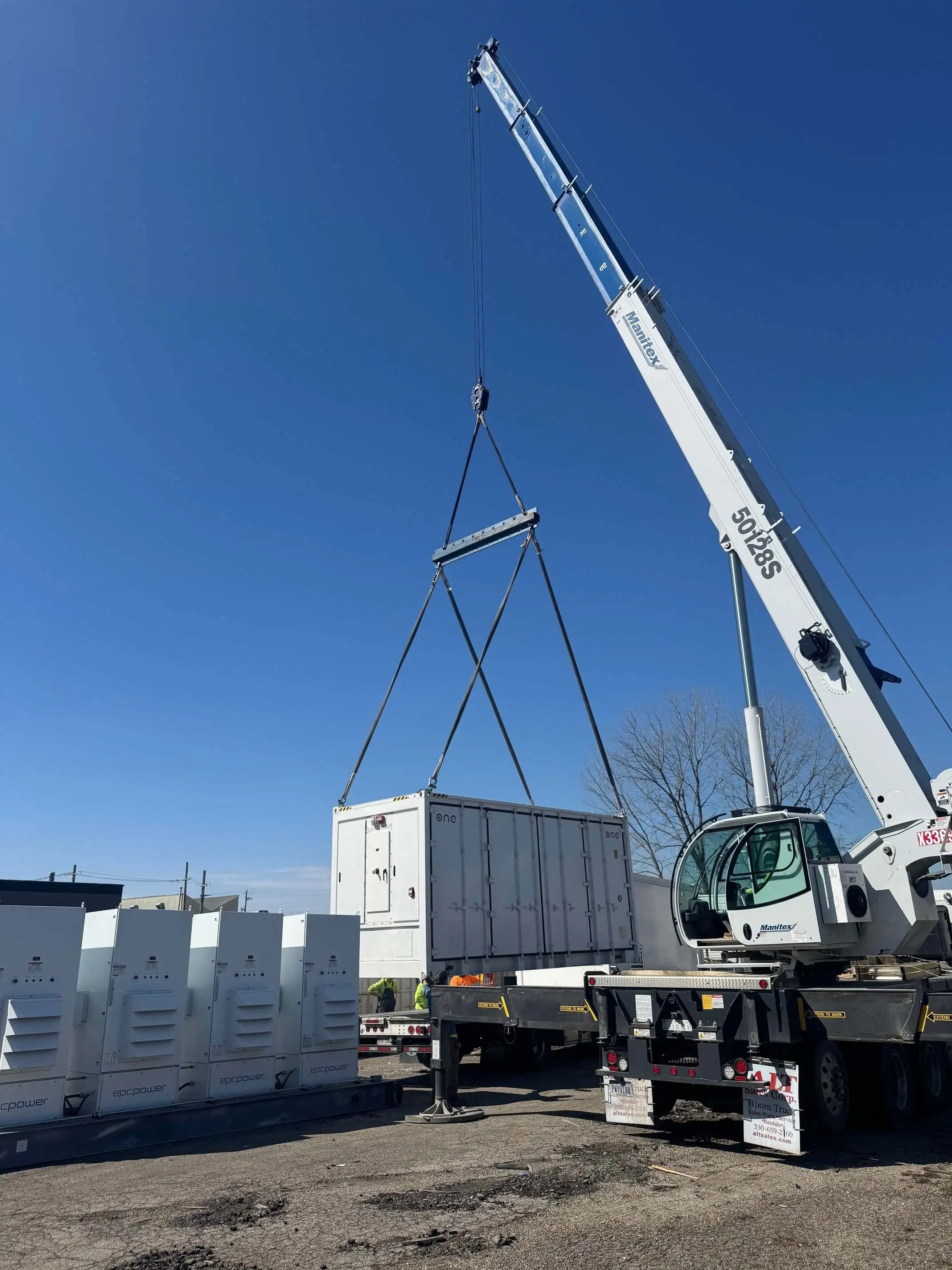


Utility-scale BESS decommissioning is complex, risky, and expensive. Learn how asset owners can reduce liability, control costs, and avoid stranded assets with proper end-of-life planning.
Utility-scale Battery Energy Storage Systems (BESS) were deployed rapidly over the last decade to stabilize grids, support renewables, and capture market incentives. What many asset owners did not plan for was the complexity, cost, and liability profile of decommissioning these systems at end of life.
Today, operators are discovering that BESS decommissioning is not a simple removal project. It is a convergence of hazardous waste regulation, high-voltage electrical risk, immature recycling capacity, and uncertain economics—often hitting the balance sheet at exactly the wrong time.
For organizations with assets entering years 10–15 of operation, the question is no longer if decommissioning risk exists, but how exposed they really are.
Contact us today to discuss your BESS decommissioning strategy and receive expert guidance on managing end-of-life complexity, cost, and liability.
Most BESS owners cannot accurately forecast the true cost of decommissioning when systems were installed.
What was once modeled as a neutral or even revenue-positive end-of-life event has become a material Asset Retirement Obligation (ARO) risk.
For CFOs and controllers, this creates a structural problem: reserves established years ago routinely understate real decommissioning costs by 30–50%, creating EBITDA pressure, audit exposure, and capital planning gaps.
Contact our team today to assess your current ARO reserves and develop accurate end-of-life cost projections.
Decommissioning a BESS is not "unplugging a container." Operators face significant technical and safety challenges that require specialized expertise.
Most industrial contractors and waste vendors are not trained or equipped to manage these risks. This increases the likelihood of safety incidents, insurance claims, and regulatory scrutiny.
Traditional waste management companies lack critical capabilities:
This gap increases the probability of incidents during transport or staging—where liability exposure is highest.
Need specialized BESS decommissioning expertise? Contact us today to discuss safe, compliant battery removal.
In many jurisdictions, BESS assets fall into a regulatory gray zone with serious liability implications.
Battery energy storage systems are often not clearly classified as universal waste, yet may not meet conventional hazardous waste profiles until damaged, degraded, or dismantled.
Under U.S. RCRA (Resource Conservation and Recovery Act) rules and similar EU frameworks, liability attaches to the waste generator—not the original equipment manufacturer (OEM).
Most take-back clauses include provisions that void coverage:
By definition, most end-of-life batteries are degraded or have been operated outside ideal conditions, allowing OEMs to decline responsibility when it matters most.
Legal and compliance teams are often forced to interpret vague end-of-life language while under time pressure from insurers, regulators, or repowering schedules.
The recycling ecosystem has not scaled at the same pace as BESS deployments, creating serious bottlenecks for asset owners.
The result is a real risk of assets being stranded on-site, which creates cascading problems:
For operators, this can turn a technically "retired" asset into a long-term financial and operational liability.
Facing recycling bottlenecks or stranded assets? Contact us today for TSDF-permitted processing solutions.
Most BESS owners rely on one of three approaches—each of which is structurally flawed and increases risk.
The typical fragmented approach creates critical gaps:
This fragmentation forces the asset owner to act as the general contractor—absorbing coordination risk, schedule risk, and safety liability across multiple unintegrated parties.
As discussed earlier, OEM take-back programs routinely fail when needed most due to exclusionary language that voids coverage for degraded, damaged, or modified systems.
Traditional waste companies lack the specialized capabilities required for safe BESS decommissioning, increasing incident probability and liability exposure.
The consequences of poor BESS decommissioning strategy extend well beyond operations and affect fundamental business performance.
Unexpected end-of-life capital expenditures can turn profitable projects into losses. ARO adjustments can trigger EBITDA restatements and affect debt covenants.
Improper handling or disposal can trigger EPA enforcement actions, state-level fines, lawsuits, and long-term remediation obligations that far exceed the original decommissioning cost.
Failure to remove legacy systems on schedule prevents repowering and locks up valuable interconnection rights—eliminating the opportunity to deploy next-generation storage technology.
Thermal events, fires, or abandoned battery assets can permanently damage stakeholder trust with investors, lenders, regulators, and community members.
Asset owners with undefined end-of-life strategies face increasing scrutiny from investors and lenders who now demand proof of decommissioning capability as part of due diligence.
The solution is not a single service—it is an integrated end-to-end decommissioning strategy designed specifically for utility-scale energy storage.
Leading operators now model decommissioning from day one, updating Asset Retirement Obligation assumptions as conditions change:
This proactive approach allows finance teams to adjust reserves incrementally rather than absorb sudden shocks at end of life.
The most effective decommissioning programs rely on a single accountable provider that can manage all aspects:
This integrated approach eliminates coordination risk and assigns clear liability ownership to a single responsible party.
A viable decommissioning strategy must reconcile complex, overlapping regulatory requirements:
This requires deep compliance expertise—not just logistics capability.
LFP (lithium iron phosphate) chemistry is now dominant in new deployments—and often costs money to recycle rather than generating scrap value.
Successful operators take a realistic approach:
The goal is not merely to remove old batteries—it is to unlock future revenue through rapid repowering.
A proper decommissioning strategy achieves:
Ready to develop a comprehensive BESS decommissioning strategy? Contact us today for expert planning and execution support.
Organizations that address BESS decommissioning proactively gain measurable competitive advantages:
Those that delay addressing decommissioning face escalating risk as assets age, contracts expire, and recycling bottlenecks worsen.
Cinco Technologies provides the only fully integrated BESS decommissioning solution that addresses every aspect of utility-scale battery end-of-life management:
Start planning during initial deployment or acquisition. Asset Retirement Obligations should be modeled from day one and updated regularly as market conditions, regulations, and technology evolve. For existing assets, begin planning at least 2-3 years before anticipated end of life to ensure adequate time for strategy development, budgeting, and execution planning. Contact us today to assess your current decommissioning readiness.
Timeline varies based on system size and complexity. Typical projects range from 2-8 weeks for complete decommissioning including electrical disconnection, dismantling, removal, and site restoration. We work within your required schedule and can expedite for urgent repowering deadlines. Contact us to discuss your specific timeline requirements.
Under U.S. RCRA rules, liability attaches to the waste generator—typically the site operator or asset owner—not the original equipment manufacturer. This means asset owners carry default liability regardless of OEM take-back commitments. Proper vendor selection and contractual structure are critical to managing this liability. Contact our compliance team to review your current liability exposure.
Many OEM take-back programs include exclusions that void coverage for degraded, damaged, or modified systems. When this occurs, asset owners need an alternative decommissioning solution. Cinco Technologies provides backup decommissioning services for situations where OEM programs fail to perform. Contact us immediately if you're facing an OEM take-back failure.
Yes. Our TSDF permit and specialized training allow us to handle damaged, defective, or fire-damaged battery systems that many vendors cannot accept. We use specialized containment, thermal monitoring, and emergency response protocols for compromised units. Contact our emergency response team for immediate assistance with damaged systems.
We provide transparent service-based pricing that accounts for current recycling economics, including LFP chemistries that often cost money to recycle. We don't rely on speculative scrap value assumptions. Our approach ensures predictable costs regardless of commodity market fluctuations. Contact us for realistic decommissioning cost projections.
We provide complete documentation including manifests, chain of custody tracking, certificates of recycling or disposal, weight tickets, compliance reports, and photographic documentation of all decommissioning activities. This documentation supports environmental audits, regulatory reporting, and Asset Retirement Obligation verification. Contact us to discuss your specific documentation requirements.
BESS decommissioning is no longer an afterthought—it is a defining factor in asset performance, financial stability, and long-term viability.
Operators who treat end-of-life as a strategic discipline, supported by integrated technical, regulatory, and recycling expertise, will outperform those who rely on outdated assumptions and fragmented vendors.
If you are approaching mid-life or end-of-life for a BESS asset—or planning future deployments—now is the time to reassess your decommissioning strategy before it becomes a crisis.
Contact Cinco Technologies today to begin building your comprehensive BESS decommissioning strategy.
Feel assured collaborating with a certified professional.
Let's build a sustainable future together – get in touch for a consultation and take the first step towards responsible waste management.


