
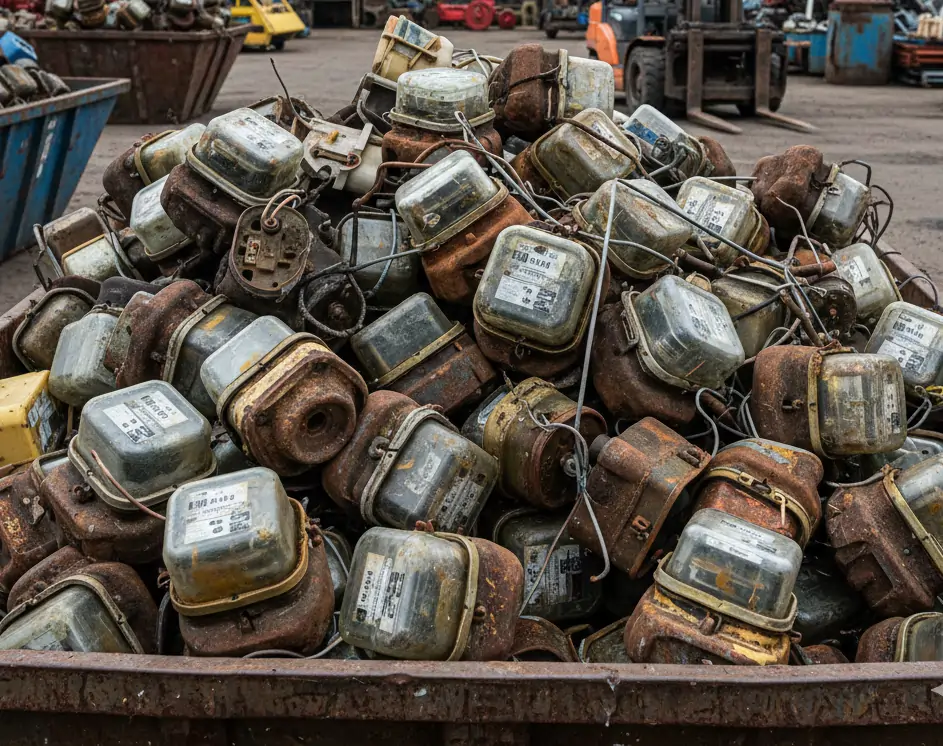


Utilities across the country are retiring millions of analog, digital, and smart meters every year — but most are leaving significant commodity value on the table and creating unnecessary compliance risk in the process. Here's how industrial meter recycling actually works, what your meters are worth, and what to look for in a processing partner.
The North American utility industry is in the middle of the largest meter replacement cycle in its history. Electric utilities are swapping out legacy electromechanical meters for Advanced Metering Infrastructure. Gas utilities are upgrading to automated meter reading systems. Water utilities are deploying smart meters with cellular connectivity. And the first generation of smart meters — deployed just 10 to 15 years ago — is already reaching end of life and being replaced by next-generation hardware.
Every one of those retired meters contains recoverable materials: copper windings, aluminum housings, steel components, glass covers, circuit boards with trace precious metals, and in some cases, small quantities of mercury or other regulated substances. The question isn't whether these meters have value — they do. The question is whether your utility meter disposal services process is set up to actually capture that value while maintaining full environmental and regulatory compliance.
For most utilities, the honest answer is no. Retired meters end up warehoused indefinitely, sent to general scrap yards that pay bottom-dollar mixed-metal pricing, or worse — disposed of in ways that create downstream environmental liability. There's a better path, and it starts with understanding what's actually inside the meters sitting in your yard.
The material composition of utility meters varies significantly by type, age, and manufacturer, but the recovery opportunity breaks down into a few major categories.
The classic spinning-disk electric meter — the type that's been on the side of buildings for decades — is actually one of the most valuable meters to recycle on a per-unit basis. Each meter contains a substantial copper winding in the current coil and voltage coil assemblies, an aluminum disk, a steel frame and mounting hardware, a glass or polycarbonate cover, and in many older units, a small mercury-containing tilt switch used as a tamper detection mechanism.
The copper content alone makes analog electric meter recycling worthwhile at scale. A single residential meter might contain 4 to 8 ounces of copper, but when you're processing thousands or tens of thousands of meters from a utility-wide AMI deployment, that copper adds up fast.
First and second-generation smart meters — the digital units with communication modules — have a different value profile. They contain less copper than their analog predecessors but introduce circuit board value. The communication boards, metrology boards, and power supply components contain small amounts of gold, silver, palladium, and tin in solder, traces, and connector plating. The housings are typically polycarbonate or aluminum, and the internal wiring adds incremental copper weight.
As early-deployment smart meters from the 2008-2015 wave reach end of life, the volume of smart meters entering the meter recycling services for utilities pipeline is increasing rapidly. Utilities that deployed hundreds of thousands of units are now facing the question of what to do with them as next-gen meters go in.
Residential and commercial gas meters are predominantly aluminum and steel by weight, with brass fittings and small amounts of copper in the index (register) assembly. Older gas meters with tin-coated internals and sealed components may require additional handling. Industrial gas meters — the large rotary and turbine models — contain significantly more aluminum and steel, plus brass valve bodies and iron housings that carry meaningful scrap value individually.
Water meters are typically brass-bodied (especially older residential units), with bronze or stainless steel internals. Brass water meters in particular carry strong scrap value — brass pricing often exceeds $1.50 per pound — and utilities replacing large quantities of aging brass meters have a genuine commodity recovery opportunity that most don't fully capture.
Most utilities that do anything with their retired meters send them to a local scrap yard. The yard weighs them in bulk, applies a mixed-metal or shred pricing, and cuts a check. The utility moves on.
The problem with this approach is straightforward: you're getting paid the lowest common denominator price for a mix of materials that includes some of the most valuable non-ferrous metals in the commodity market. When copper, aluminum, brass, and circuit boards all get tossed into the same bin and weighed together, the pricing reflects the cheapest material in the mix — not the most valuable.
A dedicated industrial meter recycling operation does it differently. Meters are disassembled or processed through mechanical separation systems that isolate individual material streams. Copper goes to copper. Aluminum goes to aluminum. Circuit boards get routed to precious metal refiners. Glass and polycarbonate get separated for their respective recycling channels. Hazardous components — mercury switches, lithium batteries in smart meters — get handled under proper environmental protocols.
The result is dramatically higher per-unit recovery value and documented, compliant disposition of every material stream — which matters when your regulators, ratepayers, or public utility commission start asking questions about how you're handling end-of-life equipment.
This is the part that catches a lot of utilities off guard. A significant percentage of electromechanical electric meters manufactured before the mid-2000s contain small mercury ampoules — typically 1 to 3 grams — used as tilt switches for tamper detection. Some manufacturers used mercury more extensively than others, and the presence of mercury isn't always obvious from external inspection.
Under EPA and state environmental regulations, mercury-containing devices are classified as Universal Waste (or in some states, hazardous waste) and must be managed accordingly. That means you can't just throw mercury-containing meters into a scrap bin and send them to a general recycler. They require identification, segregation, proper packaging, transportation under DOT hazmat rules, and processing at facilities with appropriate permits and mercury retort capabilities.
Any utility meter removal and recycling program that doesn't address the mercury question head-on is creating environmental liability, not eliminating it. Your processing partner needs to be able to identify mercury-containing units, manage them under the correct regulatory framework, and provide documented disposition records for every mercury-bearing meter processed.
Here's what the process looks like when it's done right — from decommissioning through final commodity settlement.
Before any meters ship, a qualified processor works with the utility to understand the scope: how many meters, what types, what vintage, likely mercury content, current storage conditions, and the utility's documentation requirements. This upfront assessment drives logistics planning — container sizing, transportation mode, pickup scheduling — and gives the utility a realistic estimate of recovery value before the first truck rolls.
Meters are collected in bulk containers — gaylord boxes, roll-off containers, or palletized bins depending on volume. Transportation is arranged under appropriate DOT requirements, with particular attention to mercury-containing units that may require hazmat placarding and shipping papers. Chain-of-custody documentation begins at pickup and tracks every container through processing.
At the processing facility, meters are sorted by type. Mercury-containing units are identified through manufacturer databases, visual inspection, and XRF screening when needed. Mercury ampoules are removed and sent to licensed mercury retort facilities for recovery and proper disposition. Non-mercury meters proceed to mechanical processing.
Meters are mechanically disassembled or processed through shredding and separation equipment that liberates individual material streams. Copper windings are separated from steel frames. Aluminum housings are isolated. Glass is removed. Circuit boards from smart meters are collected for precious metal refining. The goal is maximum material segregation — because segregated materials command significantly higher commodity pricing than mixed shred.
Recovered materials are weighed by grade, priced against current commodity indices, and settled with the utility. The utility receives detailed reporting: total meters processed, material weights by type, mercury disposition records, commodity pricing applied, and total recovery value. This documentation package serves double duty — it supports the utility's environmental compliance records and demonstrates responsible asset disposition to regulators and ratepayers.
Utilities operate in a heavily regulated environment, and meter disposition is no exception. Several compliance dimensions intersect when you're managing end-of-life meters.
As noted above, mercury-containing meters require handling under EPA Universal Waste rules (40 CFR Part 273) or state-specific hazardous waste regulations, whichever is more stringent. Utilities must track mercury-bearing meters from point of removal through final disposition and maintain records demonstrating compliant management.
Smart meters contain customer usage data, network credentials, and firmware that may be considered sensitive. Utilities with AMI deployments should ensure that meter recycling vendors address data destruction — either through physical destruction of communication modules or verified data sanitization — before meters enter commodity processing. This intersection of utility meter recycling and data security is increasingly relevant as more first-generation smart meters reach end of life.
For regulated utilities, the disposition of retired metering assets may be subject to PUC review. Demonstrating that the utility captured fair market value for recovered commodities — rather than simply paying for disposal — can be meaningful in rate case proceedings. Detailed settlement documentation from your processing partner supports this narrative.
Utilities under ESG reporting requirements can document meter recycling programs as part of their circular economy and waste diversion metrics. Recovery rates, pounds of material diverted from landfill, and mercury properly managed all contribute to reportable sustainability outcomes.
Not all recyclers are set up to handle the specific requirements of utility meter disposal services. Here's what separates a qualified meter recycling partner from a general scrap operation.
Can the processor identify, segregate, and properly manage mercury-containing meters? Do they have relationships with licensed mercury retort facilities? Can they provide documented mercury disposition records? If the answer to any of these is no, walk away — the environmental liability isn't worth the convenience.
Does the processor mechanically separate material streams, or do they just shred everything together? In-house separation capabilities — copper liberation, aluminum isolation, circuit board recovery — directly translate to higher commodity returns for the utility.
Is pricing tied to published commodity indices with clear methodology? Are weights certified on calibrated scales? Does the settlement package include itemized material breakdowns? Transparency isn't optional — it's how you know you're capturing fair value.
Third-party certification demonstrates that the processor operates under audited environmental, health, safety, and data security standards. For utilities, working with a certified processor provides documented evidence of responsible asset disposition that satisfies regulators, auditors, and ESG reporting requirements.
Utility meter recycling is a volume game. Your processor needs to handle tens of thousands to hundreds of thousands of meters without bottlenecking. They should provide containers, coordinate transportation, and manage the logistics so your field crews can focus on the meter swap — not the scrap.
Virtually all utility meter types are recyclable, including analog electromechanical electric meters, digital and smart meters (AMI/AMR), residential and commercial gas meters, water meters (brass and composite body), and industrial metering equipment. Each type has a different material composition and recovery value profile.
Many electromechanical electric meters manufactured before the mid-2000s contain small mercury tilt switches used for tamper detection. Mercury content is typically 1 to 3 grams per meter. These units must be handled under EPA Universal Waste regulations or applicable state hazardous waste rules and cannot be processed as general scrap.
Yes, smart meters are recyclable. The housing materials, copper wiring, and circuit boards all have commodity value. However, smart meters contain customer usage data and network credentials that should be destroyed before commodity processing. A qualified processor will address data destruction through physical destruction of communication modules or verified data sanitization.
Look for R2v3 or e-Stewards certification, which demonstrates audited compliance with environmental, health, safety, and data security standards. Additionally, the processor should have appropriate state and federal permits for handling mercury-containing devices and any other regulated materials found in utility meters.
Meter recycling programs contribute to multiple ESG metrics including waste diversion from landfill, circular economy material recovery, hazardous material management (mercury), and responsible end-of-life asset disposition. Detailed processing documentation from a certified recycler provides the data needed for sustainability reporting.
Bulk utility meter recycling starts with an assessment of meter types, quantities, and mercury content. The processor provides collection containers, coordinates transportation under appropriate DOT requirements, sorts and segregates materials at the processing facility, manages mercury under environmental regulations, and settles with the utility based on recovered commodity values with full documentation.
General scrap yards typically pay mixed-metal pricing that undervalues the individual material streams in utility meters. They also may not have the capability to identify and properly handle mercury-containing units, creating potential environmental liability. A dedicated meter recycling processor separates materials for maximum commodity value and manages regulated substances under proper environmental protocols.
If you're a utility sitting on pallets of retired meters in a warehouse or yard, you're looking at two problems: a compliance risk you haven't fully addressed and a revenue opportunity you haven't captured. Every month those meters sit, copper and aluminum prices fluctuate, storage costs accrue, and the mercury liability remains unresolved.
The utilities that treat meter disposition as a commodity recovery program — with qualified processing partners, proper mercury management, transparent pricing, and documented compliance — are turning what most operations treat as a disposal headache into a meaningful line item on the revenue side of the ledger.
Your retired meters have real value. The only question is whether you're going to capture it or keep paying to store it.
Feel assured collaborating with a certified professional.
Let's build a sustainable future together – get in touch for a consultation and take the first step towards responsible waste management.


